Dirndl Wholesale for Oktoberfest Retail
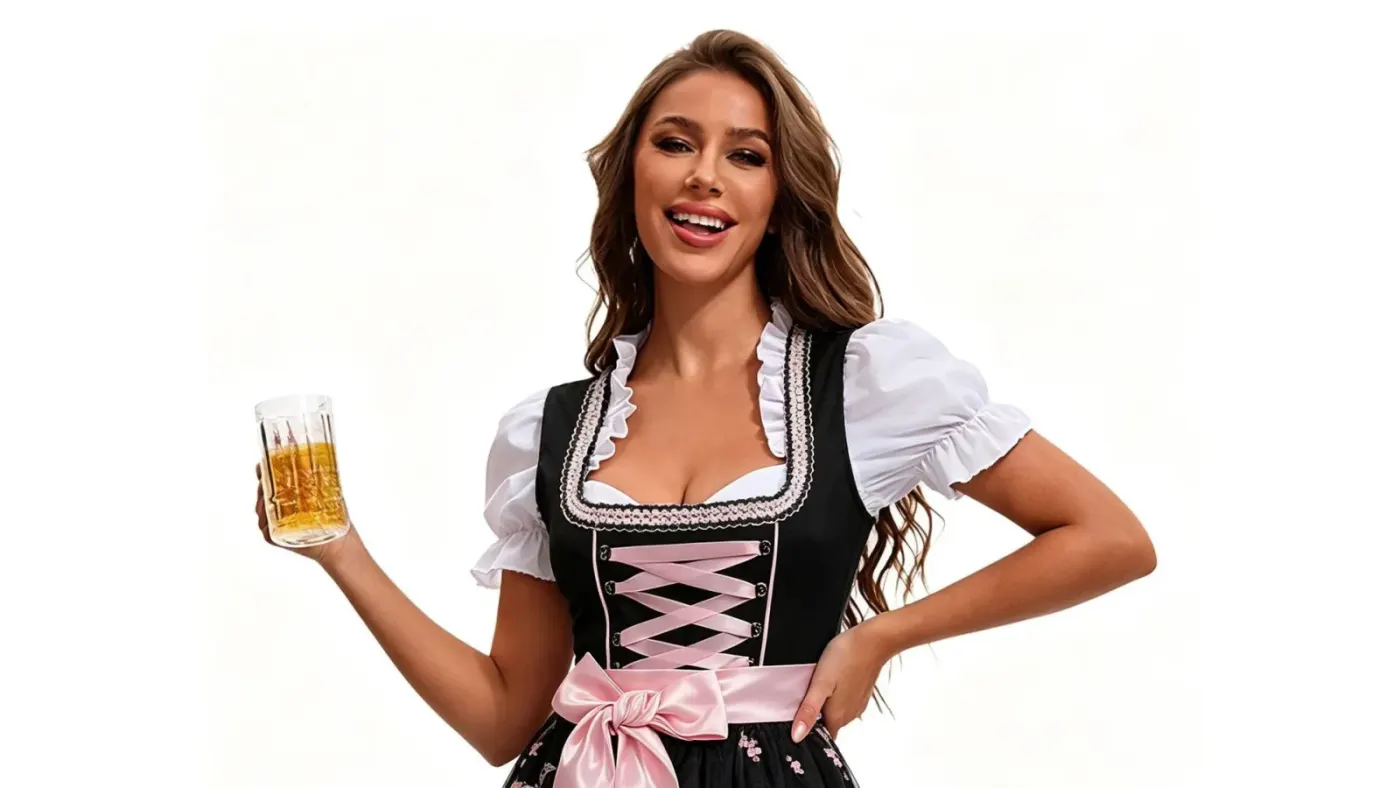
A Dirndl is a three-piece garment — bodice, skirt and apron — and sometimes a blouse. That construction is why wholesale Dirndl buying is different from buying dresses: the pieces have to work together, the bodice has to fit closely, and the apron has to sit at the right point on the waist. A catalog photo can hide all three problems.
This guide is for retailers and event suppliers building an Oktoberfest range for German-speaking markets. It covers what to specify, how to build a size curve, what to inspect and when to order.
What is actually in a wholesale Dirndl
Confirm the set before comparing prices. A three-piece Dirndl includes the bodice, skirt and apron; a four-piece adds a blouse. Some suppliers list the blouse separately, and some “Dirndl” listings are a dress with a decorative apron attached. The difference changes both the cost and the merchandising: separates let a customer change the look and let you sell blouses as an add-on.
- Bodice — fitted, usually lined, with a zip or lacing at the front or side.
- Skirt — gathered or pleated, attached or separate, knee-length to midi.
- Apron — the piece that carries the colour story and the tie.
- Blouse — often sold separately; sizing may differ from the bodice.
Building a size curve for Germany and Austria
EU 36–44 covers the core retail range, with 38 and 40 usually the top sellers. A practical first order might weight the middle sizes and include a smaller run at the ends, rather than buying evenly across the range. For a stock style listed in S–5XL, bridge the letter sizes to EU labels using measurements, not assumptions: an EU 38 is not the same body as an Italian 38, and the bust, underbust and waist numbers are what the customer will feel.
Our Dirndl size grading guide includes an indicative EU-to-letter table and explains which measurements control the fit. If you need sizes outside the stock range, we can grade a style from 100–300 pieces per style and colour.
Quality checkpoints for a Dirndl order
- Bodice structure — check the boning or interlining, the lining and whether the front edge rolls. A bodice that collapses at the top will not hold the blouse neckline.
- Apron tie — the tie and its channel are a common failure point. Check the length at the largest size and that the knot holds.
- Zip and closures — run the zip through its full length and check the hook at the top.
- Skirt volume — pleat or gather density should stay consistent across the size run; a 4XL skirt that looks sparse reads as cheap.
- Colourfastness — reds, greens and blues are the traditional palette and the most likely to bleed. Wash a sample before bulk.
- Blouse fabric — check opacity and shrinkage; a blouse that turns transparent under stage lighting is a return.
When to order
Oktoberfest stock should be on shelf by late August. Working back: bulk production takes 2–4 weeks after approval and deposit, sea freight to Europe takes several weeks, and samples take 3–7 working days for stock styles. Confirm samples in March, bulk in April, and ship in May–June. New styles and private-label programs need 6–10 weeks, so the decision moves to late winter.
Fasching and carnival in January–February create a second, smaller peak. The same stock can serve both seasons if the colour range is not exclusively autumnal.
Private label for EU retailers
Private-label Dirndl usually means your label, hangtag and packaging, a colourway change, EU size grading and sometimes a fabric substitution. Custom colours and trims are quoted from 100–300 pieces per style and colour. If you sell online, ask for a polybag and size sticker that match your warehouse process; if you sell through wholesale accounts, ask for a carton ratio that matches their allocation.
Our Oktoberfest collection includes Dirndl sets, blouses, aprons and Lederhosen. The Dirndl anatomy guide explains how the pieces combine. Send your EU size curve and retail dates through the inquiry form for a stock or private-label quote.
FAQ
What is the MOQ for wholesale Dirndl?
Stock Dirndl styles start at one piece per style for a trial order, with mixed sizes and colours accepted, and bulk pricing from 10 pieces per style. Custom colours, EU size grading and private-label programs are quoted from 100–300 pieces per style and colour.
Do your Dirndl sets include a blouse?
It depends on the style. Some sets are three-piece (bodice, skirt, apron) and some include a blouse. Each product page lists what is included; check it before comparing prices, because blouse-included sets cost more.
When should retailers place an Oktoberfest Dirndl order?
Confirm samples in March, bulk in April and ship in May–June so stock reaches European stores by late August. Custom and private-label programs take 6–10 weeks, so they need to start in late winter.
Planning a seasonal or private-label range? Send us your brief and our team will reply with fabric, sampling and lead-time options.