Kids’ Costume Wholesale: Sizes & Safety
Children’s costumes are the most return-prone part of a costume range. The fit window is narrow, the wearer grows, the parent buys late, and the same garment has to survive a school day, a party and a photograph. Wholesale buying for kids is therefore less about picking characters and more about sizing, safety and packing.
This guide covers the decisions a retailer or event supplier makes before ordering a kids’ range: how to size it, what to check, how to build an assortment and how to pack it for sale.
Size by height first, age second
Children’s costumes are usually sold by age band, but height is the measurement that predicts fit. A 5–6 age label can cover a 110 cm child and a tall 120 cm child, and the difference shows at the sleeve and hem. Ask for a height range in centimetres for every size and publish it next to the age label.
| Common label | Height guide | Buying note |
|---|---|---|
| 2–3 years | 92–98 cm | Check small parts and closure access |
| 3–4 years | 98–104 cm | Room for a base layer |
| 5–6 years | 110–116 cm | Core school-age size |
| 7–8 years | 122–128 cm | Core party size |
| 9–10 years | 134–140 cm | Often the top of the kids’ range |
| 11–12 years | 146–152 cm | May overlap with teen/adult XS |
The table is indicative. Confirm the measurements on the product page and approve a sample in the smallest and largest size you plan to stock.
Safety checks that change the order
- Small parts — beads, buttons and decorative pieces should be attached so they cannot be pulled off by a young child.
- Cords and ties — avoid long drawstrings and neck ties that can catch or tighten.
- Flammability — ask which test the fabric and trims have passed and request the report.
- Closures — zips and hooks should be operable by a parent and not scratch the skin.
- Labels — fibre content, care and size must be present and legible after washing.
In the UK and EU, many children’s costumes are treated as toys and fall under flammability and small-parts rules. Our compliance guide explains the labels and test reports to request. Do not accept a badge as proof; ask for the test name and the lab.
Assortment planning for kids
Kids’ ranges sell in clusters: siblings, school events, birthday parties and Halloween. A practical assortment mixes:
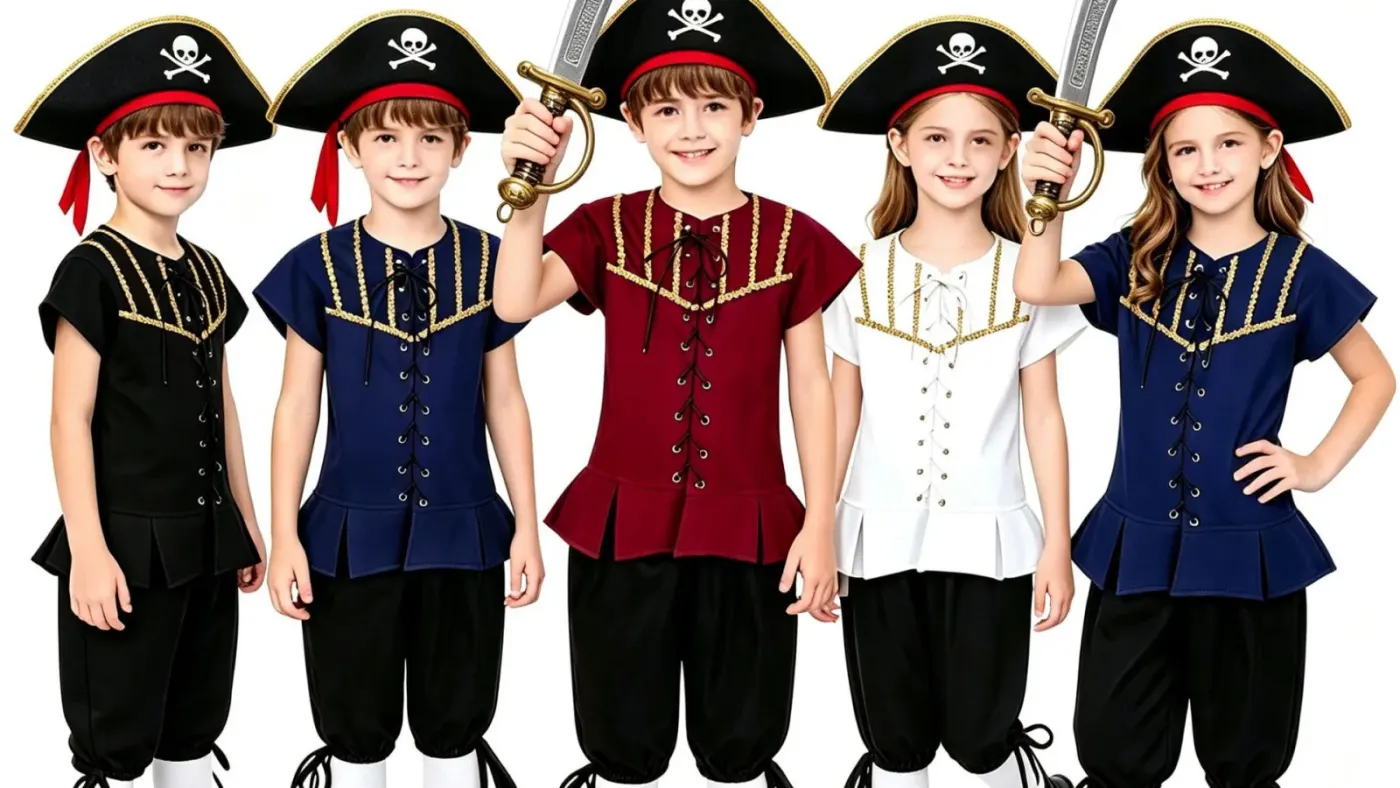
- Evergreen characters — pirates, princesses, animals, superhero-style pieces that sell across the year.
- School-event looks — storybook and historical pieces for book week and school plays.
- Seasonal — Halloween, Christmas and carnival pieces that carry the peak.
- Accessories — hats, capes and wands that lift the average basket without a full costume.
Buy the core sizes deeper than the extremes, but do not skip the extremes entirely: a parent shopping for a tall child will pay for the size that fits. A first order can be one piece per style across the range, then replenish the winners.
Packing for retail and online
Confirm the polybag, the size sticker and the carton ratio. If you sell online, a bag that can ship without repacking saves labour; if you sell wholesale to schools or party shops, a carton ratio that matches their allocation saves breakage. Ask for the shipping marks to include your PO and destination; mixed cartons are the most common receiving error.
Order timing
Kids’ Halloween stock should be on shelf by early September, which means samples in April–May and bulk in June. Book week and school plays need stock in February, so order in November–December. Stock styles sample in 3–7 working days and bulk production usually takes 2–4 weeks after approval and deposit; custom development takes 6–10 weeks.
Our kids’ collection lists the current range. For a size and assortment plan, send your target ages, quantity and retail dates through the inquiry form.
FAQ
How do I choose kids’ costume sizes for wholesale?
Size by height in centimetres first and treat the age label as merchandising. Approve a sample in the smallest and largest sizes you plan to stock, and publish the height range next to the age on your product page.
What safety documents should I ask for?
Ask for the fabric and trim test reports, the test names and the lab, plus labels showing fibre content, care and size. Children’s costumes in the UK and EU may fall under toy safety rules, so confirm the reports match your market.
When should retailers order kids’ Halloween costumes?
Plan samples in April–May, confirm bulk in June and ship in July so stock is on shelf by early September. Custom styles need 6–10 weeks and should start earlier.
Planning a seasonal or private-label range? Send us your brief and our team will reply with fabric, sampling and lead-time options.